Supporting Mental Health in End-of-Life Care
589 0
By Associate Professor Sarah Yardley
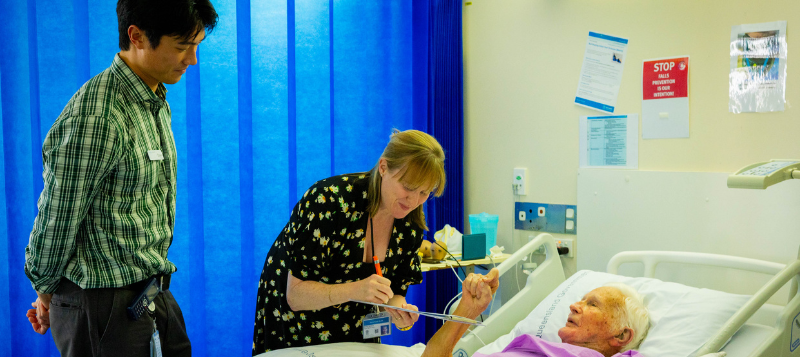
Photograph by Tricia King, Picture Yourself (CC BY-NC)
During my Churchill Fellowship travels in 2024, a significant boundary-crossing initiative I visited was in New York, where I observed the transformative potential of acute hospital care delivered by dual trained clinicians, professionals skilled in both psychiatry and palliative care.
At Weill Cornell, in a programme developed by Daniel Shalev, clinicians work within a hospital based behavioural health and palliative care team that models what truly integrated care can look like. Chaplains, psychologists, social workers, cultural interpreters, and medical specialists collaborate daily, not “staying in their lanes” but authentically combining their expertise, supported by a culture that values co working, shared learning, and collective responsibility.
This approach aligns powerfully with the relational and social models of care, which recognise that physical, psychological, social, spiritual, community and environmental factors shape a person’s wellbeing, especially at the end of life. By drawing on each other’s perspectives, the team have reduced fear of the unfamiliar, extended their skills, and created a more meaningful experience for patients.
Initiatives include embedding mental health services directly into palliative care programs and developing collaborative care models that integrate psychiatric expertise into routine practice. These innovations ensure that people with serious illness receive needs-orientated support in a timely manner.
This is crucial because existential distress often intensifies as death approaches and may be exacerbated by pre-existing complex mental health conditions or past traumatic experiences. People may grapple with identity, meaning, and legacy. Recognising these concerns, and being willing to listen, improves the quality of end-of-life care. The New York team’s training programs, which weave psychotherapeutic concepts such as psychological formulation and countertransference into serious illness communication, help clinicians navigate these conversations with confidence and compassion.
Anxiety, depression, and demoralisation are also common among people with life limiting illness. The challenge lies in recognising when symptoms are part of the expected emotional landscape of dying, and when they signal worsening of pre-existing complex mental health conditions that require targeted intervention. Integrated teams are uniquely positioned to make these distinctions and respond appropriately.
To translate these insights into health and social care practice more widely, I propose several ideas that support relationship centred care:
- Warm handover protocols, enabling trusted community members or chosen family to accompany people across care settings.
- Universal distress screening, normalising conversations about emotional wellbeing.
- Trust building rituals, such as joint check ins or shared reflection sessions.
- Storytelling for change, creating spaces where patients, carers, and staff influence local decision making.
- Peer support roles, drawing on lived experience to strengthen connection and advocacy.
- Workforce exchanges, allowing mental health, palliative care, and social care teams to learn from each other.
These ideas reflect a broader shift in how we think about healthcare systems. We need to rewild healthcare and create space for relationship by loosening rigid boundaries, valuing relationships, and creating systems that respond to the full complexity of human experience.
Supporting mental health is an important part of compassionate palliative and end of life care, and it is crucial for health professionals to feel confident in helping people with dual mental health and palliative care needs.
The End-of-Life Essentials project has an updated ‘Understanding Patient Mental Health at the End of Life' module which provides free, evidence-based learning to support healthcare professionals.
Dr Sarah Yardley is Associate Professor of Palliative Medicine at University College London .