For healthcare professionals, balancing hope with honesty, openness and clear communication can be challenging when caring for someone with a life-limiting illness.
We may feel pressure to give patients and families certainty about what lies ahead, including how much time someone may have left. But when it comes to an individual patient, precise prognostication is rarely possible.
So, how can we support hope when we cannot promise that things will get better?
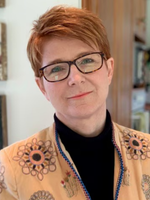
For Dr Jo Doran, the answer lies in understanding that hope is not fixed.
“When people’s exclusive hope was about survival and not dying… if we rest all our hope on getting better, people are setting themselves up for complete disaster,” Jo explains.
Instead, she describes hope as a spectrum. At one end may be a form of hope that becomes unhelpful or unrealistic. At the other is what she describes as “nourishing hope” - hope that can support people to cope with what they are experiencing.
And that hope can change.
“For me, hope is the ultimate coping mechanism,” Jo says. “Something that makes the unbearable bearable. And it changes. It’s different for different people and it changes within us as disease progresses.”
Allowing space for uncertainty
Jo also challenges health professionals to think differently about denial and what might appear to be false hope.
Denial can be a protective mechanism, particularly when someone is struggling to process what is happening to them. Jo used an egg to describe this:
“Cracking that shell from the inside is called growth, cracking that shell from the outside should be called trauma.”
Rather than trying to dismantle denial, Jo suggests allowing people space to process difficult information in their own time, while also recognising the impact on families.
This can be a delicate balance. Health professionals don't want to collude with unrealistic expectations, but they also don't want to damage a relationship of trust.
If someone says, “I’m going to make it to my daughter’s wedding,” Jo suggests: “OK, let’s work with that.”
For health professionals, this means allowing space for uncertainty and hope while continuing to support honest and compassionate communication.
It also means understanding what gives an individual person hope.
This might be connection with family, friends or others who are important to them. It might be achievable goals, spirituality, uplifting memories, humour, or simply feeling that their life continues to have value and worth.
Just as importantly, we need to recognise what can take hope away. Abandonment and isolation, uncontrolled symptoms and pain, and feeling that their personhood is being devalued can all contribute to a sense of hopelessness.
Fostering hope therefore begins with how we care for people: welcoming patients and families, working to provide physical comfort, and communicating in ways that genuinely value the person in front of us.
Hope doesn’t have to mean hoping for a cure. It can mean helping someone find what matters to them now – and supporting them as that hope changes over time.
How can you foster hope?
Learn more about supporting people living with life-limiting illness in the End-of-Life Essentials Chronic Complex Illness End-of-Life Care module.